The CMR Convention in practice: liability and chain risks
When does the CMR Convention apply?
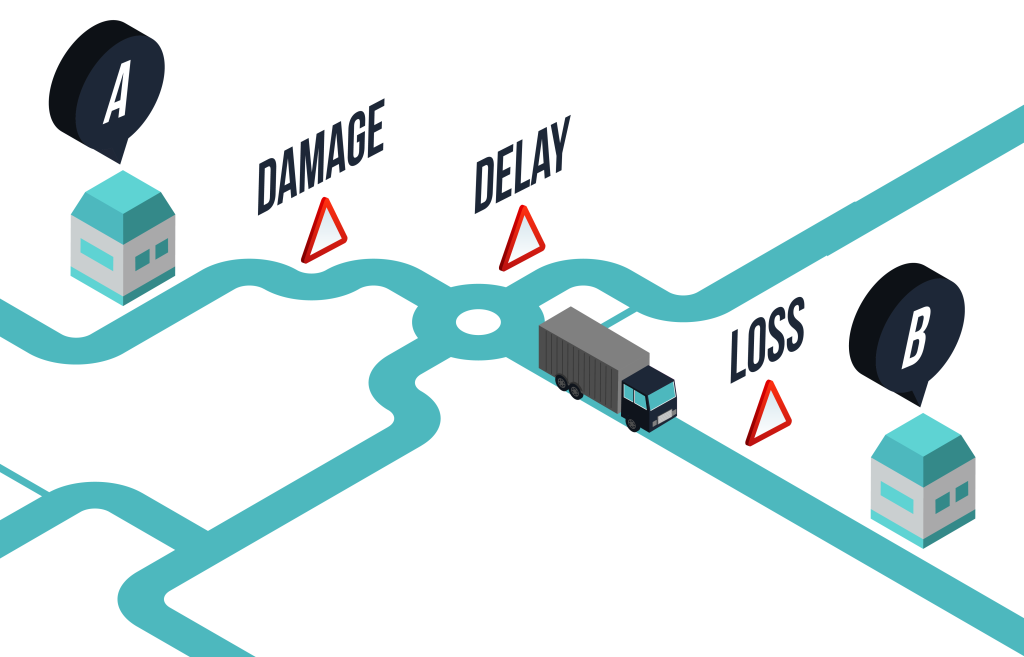
International road transport seems straightforward: goods are collected, transported and delivered. Reality is more complex. Shipments get damaged, disappear or arrive late. In such situations, liability is governed by the CMR Convention.
The CMR Convention applies automatically to international carriage of goods by road when the place where the goods are taken over and the place of delivery are located in two different contracting states. The convention is mandatory in nature, meaning that contractual clauses deviating from its provisions are void.
The basic principle of the CMR Convention is clear: the carrier is liable for loss, damage to, or delay in the delivery of the goods occurring between the moment the goods are taken over and the moment they are delivered. This liability is subject to limited exceptions only, such as contributory fault of the claimant, an inherent defect of the goods, or circumstances amounting to force majeure.
Chains and subcontractors: liability remains with the main carrier
International transport is frequently carried out by multiple parties. Subcontracting to sub-carriers is common practice. However, the assumption that liability can simply be passed down the chain is incorrect.
Article 3 CMR provides that the carrier is responsible for the acts and omissions of its agents, servants and any other persons whose services it uses in performing the carriage, provided that these persons act within the scope of their duties. In legal terms, the carrier is liable as if those acts or omissions were its own. Escaping this liability is not easy, as was recently confirmed by the Rotterdam District Court (Rotterdam District Court, 14 January 2026, ECLI:NL:RBROT:2026:352).
The case concerned a shipment of solar panels worth more than €111,000 that disappeared during transport from Rotterdam to Portugal. The main carrier had subcontracted the transport through several intermediaries. The goods were collected by a driver who was able to provide the correct container numbers, references and details of the principal. The shipment, however, never arrived at its destination. It later emerged that a falsified CMR delivery receipt had been submitted.
The court held that the driver acted under the responsibility of the main carrier, even though the driver had not been engaged directly by that carrier. Relevant factors were that the main carrier had invoiced the transport, submitted the CMR delivery receipt and presented itself externally as the carrier. The court also emphasised the evidentiary importance of CMR documentation in international road transport. The CMR consignment note and the delivery receipt played a central role. The fact that the delivery receipt later turned out to be falsified was considered a risk borne by the main carrier.
As the driver had never intended to deliver the goods and had instead appropriated them, the court found intent within the meaning of Article 29 CMR. This intent was attributed to the main carrier, with the consequence that the carrier could not rely on any limitation of liability.
The court also rejected the defences of contributory negligence and judicial mitigation. Because the CMR Convention regulates liability on a mandatory basis, national provisions such as Articles 6:101 and 6:109 of the Dutch Civil Code cannot be applied.

What does this mean in practice?
The takeaway is clear: the party contracting as the main carrier bears the chain risk. Subcontracting arrangements, internal agreements or internal control mechanisms do not protect against external liability under the CMR Convention. Fraud or intentional misconduct further down the chain may therefore expose the main carrier to unlimited liability.
How our lawyers can help
Our team has extensive experience in CMR disputes and regularly advises carriers, principals and insurers on liability issues and strategic decisions. We assist with assessing litigation prospects and determining the most effective legal strategy, combining in-depth legal expertise with up-to-date knowledge of case law.
Want to know more? Feel free to contact us.


mr. E. (Erwin) Mazaira
Lawyer
Erwin specializes in (international) commercial contract law. In addition, his practice consists of advising and litigating in the field of intellectual property law and he deals with issues at the intersection of technology and law, including e-commerce, contracts for cloud solutions, regulation for (social media) platforms, IT disputes and the legal implications of new technologies.